Why Camp Hill
The town of Camp Hill stands uniquely in both Alabama and U.S. history as the site of the largest African American labor organization ever to occur in American history.
As the 1930s birthplace of the Mighty Sharecroppers Union (at its largest almost 8,000 strong), community members from Camp Hill worked alongside members of the Communist Party of America, with several citizens of this small Alabama town traveling as far as Moscow to train in labor organizing, resulting in a self-led, self-determined campaign for economic justice that some modern historians now propose as the real birthplace of the modern Civil Rights movement.
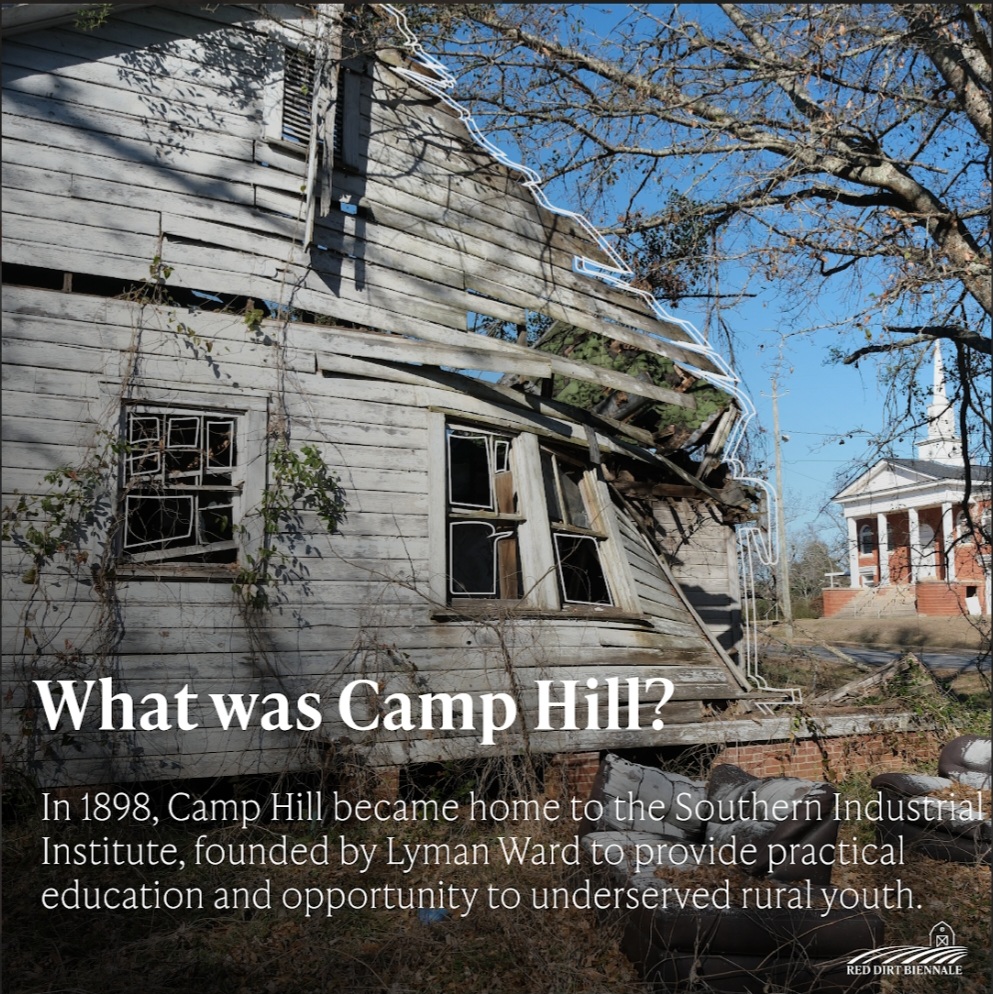
Combined with being a small town in rural Alabama that found itself home to New York Universalist preacher Lyman Ward (a man of peace and education) who traveled down from the North to meet Booker T. Washington (and later traveled with him on combined speaking tours), as well as being the birthplace of Progressive Senator Claude Pepper (who soon came to be known as “Red” Pepper for his own presumed communist leanings), Camp Hill exists at a nexus of movements and philosophies that might seem unusual in the very Deep South.
With a diverse, racially mixed population in a place that still seems never wholly conquered, Camp Hill is a town with a history that seems strongly relevant, again.